
Introduction
Healthcare has always remained a profession that prioritizes people. Doctors, nurses, and caregivers dedicate their lives to help patients recover and maintain their well-being. Yet behind every consultation lies a complex web of administrative tasks including documentation and data management. This landscape is undergoing a shift in 2026 with the automation happening in 2026, allowing medical professionals to spend less time on paperwork and more time paying attention to patients.
With the help of diagnostic tools powered by AI, automated scheduling for making appointments and systems that support smart monitoring, healthcare organizations are embracing technology. This eventually creates a healthcare ecosystem that is more efficient, accurate, and one which gives priority to people.
This article explores how healthcare automation is transforming patient care in 2026 and why it is becoming an essential component of modern healthcare delivery.
What Is Healthcare Automation?
Healthcare automation refers to the use of technology to perform repetitive and time-consuming tasks with minimal support from humans. These technologies include artificial intelligence (AI), machine learning, robotic process automation (RPA), predictive analytics, and Internet of Things (IoT) devices.
The goal is not to replace professionals working in the healthcare sector but to support them by reducing their workload especially in administrative tasks. This will help improve the efficiency of operations, and enable precision in decision-making.
Today, automation is being used across health platforms to streamline workflows and improve the results and experiences of patients.
How does AI Provide Diagnostic Accuracy?
One of the most significant ways healthcare automation is transforming patient care is through improved diagnostics.
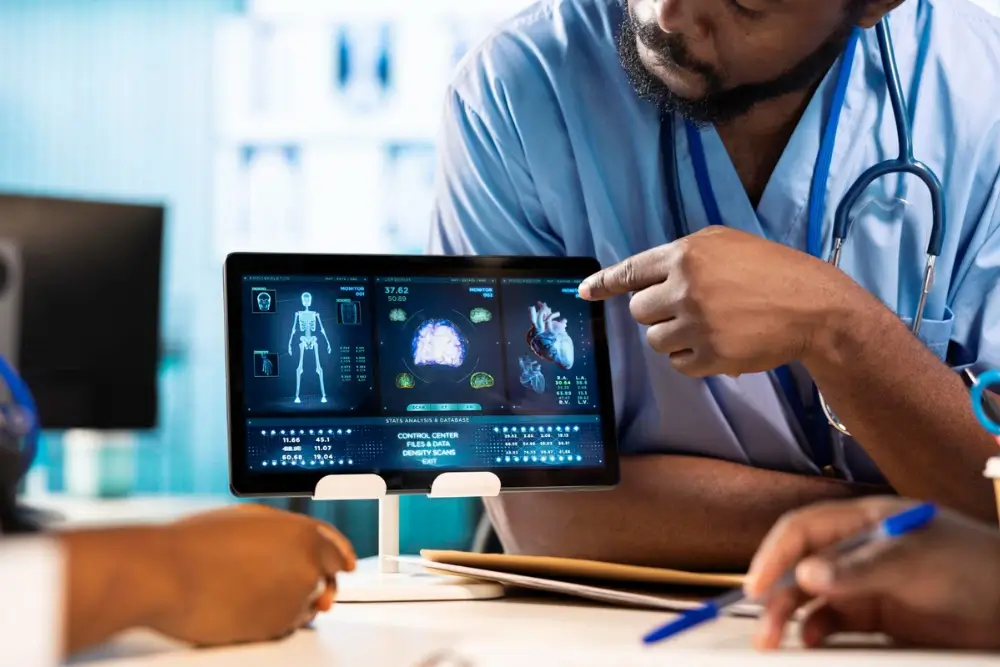
Within a matter of seconds AI-systems can analyse the test results of patients and give decisions. In many cases, these tools help physicians identify abnormalities that might otherwise be overlooked. Advanced imaging software can detect early signs of conditions such as cancer and cardiovascular disease with remarkable precision.
Hence the goal is not to replace doctors but to support them in reaching results with precision. Physicians can review AI-generated insights matching it with their clinical expertise. This can lead to faster and more accurate diagnoses.
As a result, health conditions can be detected easily, which often translates into better treatment outcomes.
Streamlining Administrative Workflows
Inefficiencies in administration have long been a challenge in healthcare. It has always remained time consuming to schedule appointments and manage patient records. However, in 2026, automation is significantly reducing these burdens.
Automated scheduling systems allow patients to book, reschedule, or cancel appointments online without waiting on hold. Intelligent chatbots answer common questions and guide patients through routine processes.
Meanwhile, robotic process automation handles repetitive tasks such as claims processing and data entry. This not only reduces operational costs but also minimizes the common errors made by humans that can lead to delays and frustrations.
Healthcare staff can now focus on more meaningful interactions with patients instead of being anxious and burdened by paperwork.
Improving Patient Monitoring and Remote Care
Remote patient monitoring has evolved rapidly in recent years, and automation is at the heart of its success.
Wearable devices and connected health sensors continuously track vital signs such as heart rate and blood pressure readings. This data is analyzed by automated systems in real time and they can alert healthcare providers when abnormalities are detected.
This technology offers a safer and more proactive approach to care especially for patients with chronic conditions. Instead of waiting for symptoms to worsen, clinicians can intervene early and complications can be avoided.
Remote monitoring is particularly beneficial for elderly patients and individuals living in rural areas, where access to healthcare facilities may be limited. By enabling continuous care beyond hospital walls, automation helps create a more connected and responsive healthcare experience.
Personalizing Patient Treatment
Every patient is unique, and healthcare automation is making personalized medicine more achievable than ever.
Advanced analytics platforms can process vast amounts of patient data, including medical history, genetic information, lifestyle factors, and treatment responses. Using this information, automated systems help healthcare providers develop tailored treatment plans that align with each patient's specific needs.
For example, predictive analytics can identify patients at higher risk of developing certain conditions and recommend preventive measures before symptoms appear. Similarly, automated medication management systems can help determine the most effective therapies while reducing the risk of adverse drug interactions.
This personalized approach improves patient satisfaction and contributes to better health outcomes.
Supporting Healthcare Professionals
Healthcare workers continue to face increasing workloads and burnout concerns. Automation is helping alleviate some of these pressures by handling routine and repetitive tasks.
Voice recognition software automatically transcribes clinical notes during patient consultations, reducing documentation time. AI-powered assistants help organize patient records, summarize medical histories, and retrieve relevant information quickly.
By reducing administrative responsibilities, automation allows healthcare professionals to dedicate more attention to patient interactions, critical decision-making, and complex medical cases.
The technology acts as a valuable partner rather than a replacement, enhancing productivity while preserving the human touch that remains central to healthcare.
Enhancing Patient Engagement
Modern patients expect convenience, accessibility, and timely communication. Healthcare automation is helping providers meet these expectations.
Automated communication systems send appointment reminders, medication alerts, follow-up instructions, and wellness recommendations directly to patients through mobile apps, text messages, or email.
Virtual health assistants are available around the clock to answer questions and provide guidance for non-emergency concerns. This accessibility helps patients stay informed and engaged in their healthcare journeys.
When patients feel more connected to their care providers and have easier access to information, they are more likely to follow treatment plans and maintain healthier lifestyles.
Challenges and Considerations
Despite its many benefits, healthcare automation is not without challenges.
Data privacy and cybersecurity remain critical concerns as healthcare organizations handle sensitive patient information. Strong security measures, regulatory compliance, and continuous monitoring are essential to maintaining trust.
There is also the challenge of ensuring that automated systems remain transparent and free from bias. Healthcare providers must carefully evaluate AI-driven recommendations and maintain human oversight in clinical decision-making.
Successful implementation requires ongoing training, investment, and collaboration between healthcare professionals and technology providers.
The Future of Healthcare Automation
Looking ahead, healthcare automation will continue to evolve and become even more integrated into patient care. Emerging technologies such as predictive AI, digital twins, advanced robotics, and intelligent virtual care platforms are expected to further enhance healthcare delivery.
As automation capabilities expand, healthcare organizations will be better equipped to provide proactive, personalized, and efficient care. Patients will benefit from faster diagnoses, improved treatment plans, and more seamless healthcare experiences.
Rather than replacing human expertise, automation will continue to empower healthcare professionals to deliver higher-quality care while focusing on what matters most: the patient.
Conclusion
Healthcare automation is transforming patient care in 2026 by improving efficiency, enhancing diagnostic accuracy, supporting personalized treatment, and expanding access to care. From automated administrative processes to intelligent monitoring systems, these technologies are helping healthcare providers deliver better outcomes while reducing operational burdens.
As healthcare continues to embrace digital transformation, automation will play an increasingly vital role in creating a more responsive, patient-centered future. Organizations that invest in these innovations today are positioning themselves to meet the growing demands of modern healthcare while delivering exceptional patient experiences for years to come.