The transformation businesses face under the influence of Artificial Intelligence (AI) has become even stronger when compared to the recent past. Even though AI still remains a strong discussion area in boardrooms, several leaders believe that transformation cannot be achieved with technical development alone.
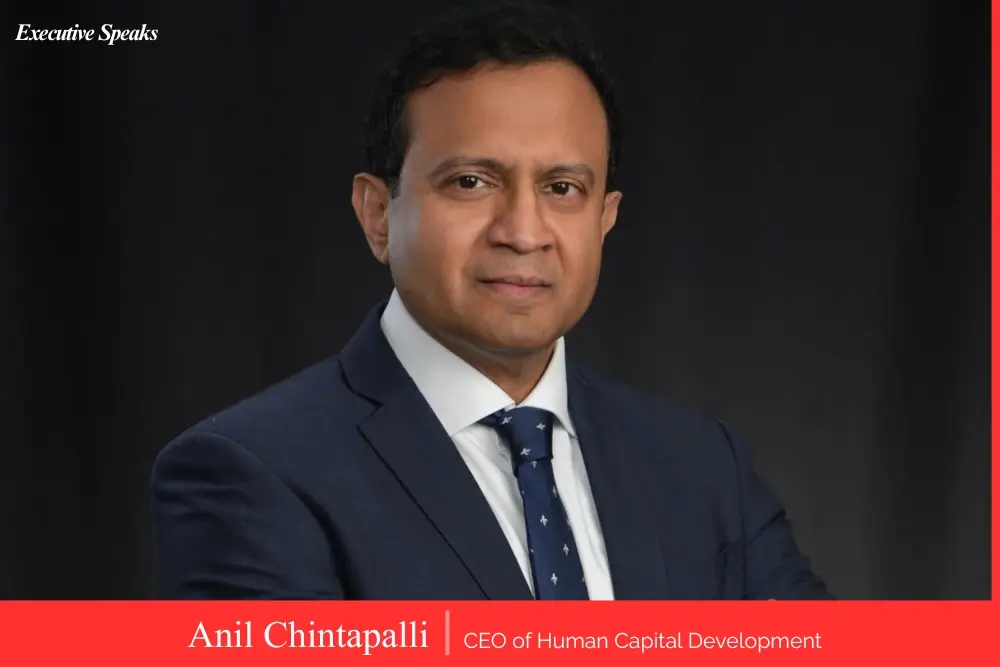
Organizations that achieve meaningful results combine technology with strategic leadership, disciplined execution, and a culture that embraces change. For instance, the transformation of Microsoft gave us several lessons from Satya Nadella, who was driven not only by cloud technologies like Azure but also aimed at a cultural shift that focussed on collaboration and innovation. These principles have shaped Anil Chintapalli and his career, whose work spans enterprise technology, large-scale business transformation, mergers and acquisitions, and AI strategy.
To understand who is Anil Chintapalli, we have to look at his expanded work experience. He has worked with several global enterprises with a goal to modernize operations and strengthen customer relationships. His work also covered the target of creating long-term value that resulted in a transformation based on technological enhancement. Chintapalli believed that AI adoption within a company can be considered successful only by analysing the business outcomes and not by how far technology has been adopted and implemented within the organization.
Why Technology Should Follow Strategy
Many organizations focus on investing in new digital platforms and on other technological innovations rather than developing a strategy to incorporate essential tech within their operations.
Chintapalli advocates the opposite approach.
As an initial step, organizations should first understand the business problems they have to resolve.
For example, a manufacturer may give more emphasis on the visibility of the supply chain, while a healthcare provider may focus on improving the outcomes of a patient; both through predictive analytics. On the other hand, fraud detection and prediction and faster assessment of risk factors involved, could be the priority of financial institutions. Thus, even though the integration of AI, ERP systems and cloud platforms like Azure is essential, the desired outcomes of each business might differ. Hence, having a clear understanding of the needs of AI transformation within organizations is crucial for building efficiency.
This outcome-first mindset helps organizations avoid investing in technology simply because it is new or popular.
How Value was Created by Chintapalli Through Enterprise Technology
Throughout his career, Chintapalli has worked extensively with enterprise platforms including SAP, Salesforce, cloud technologies, blockchain, CRM systems, and artificial intelligence.
Rather than implementing technology for its own sake, these initiatives focused on solving practical business problems and by answering thoughtful questions, like how Aravind Srinivas built Perplexity.
For example:
- Automating repetitive workflows to improve efficiency of operations.
- Modernizing management of customer relationships to increase client retention.
- Using AI-powered analytics to make decision-making faster.
- Standardizing enterprise processes across global operations.
By connecting technology investments directly to measurable business outcomes, organizations are better positioned to achieve sustainable growth rather than isolated digital projects.
Why Chintapalli Valued Leadership Beyond Technology
One of the significant reasons why technology transformation frequently fails is because organizations underestimate the human side connected to change.
Questions arise from employees as they become anxious to know how newly implemented technologies will affect their responsibilities and ways of working. Some will even be curious to know how far can their career develop with the newly integrated technologies.
These concerns should be addressed immediately and strong leaders maintain effective communication to answer these questions from the employees. Leaders like Chintapalli were ready to share an executive mindset maintaining a shared responsibility on these matters to boost the confidence of his employees and to maintain accountability.
One principle frequently associated with Chintapalli's leadership philosophy is alignment.
When executive teams, managers, and employees were given a clear picture and purpose on the reason and goals behind transformation, organizations are better equipped to adapt successfully. Employees were willing to accept and move along the transformation as they could also comprehend the new goals of the enterprise.
This emphasis on leadership explains why culture often becomes a stronger predictor of transformation success than technology itself.
Leadership Lessons from Anil Chintapalli
Start with Business Outcomes
Technology investments should support clearly defined organizational objectives rather than becoming objectives themselves.
Treat Transformation as a Continuous Journey
Markets, customer expectations, and technologies continue to evolve. Organizations must evolve with them.
Connect Technology with Operations
Successful AI adoption requires changes in processes, governance, and workforce capabilities.
Invest in Customer Value
Long-term growth depends on creating measurable value for customers rather than simply introducing new technology.
Build a Culture That Embraces Change
Transformation succeeds when employees understand, support, and participate in organizational change.
Frequently Asked Questions
Who is Anil Chintapalli?
Anil Chintapalli is a business transformation leader and technology strategist known for his work in enterprise AI, digital transformation, and operational growth.
What is Anil Chintapalli known for?
He is recognized for leading large-scale business transformations, enterprise technology initiatives, and AI-driven operational strategies.
Why is AI business transformation important?
AI enables organizations to improve efficiency, automate workflows, enhance decision-making, and create better customer experiences when aligned with business goals.
What leadership lessons can businesses learn from Anil Chintapalli?
Leaders can learn to focus on business outcomes, embrace continuous transformation, align technology with strategy, and build cultures that support innovation.
How does AI support enterprise transformation?
AI helps organizations automate processes, analyze data, improve customer engagement, and make faster, data-driven decisions when integrated into core business operations.