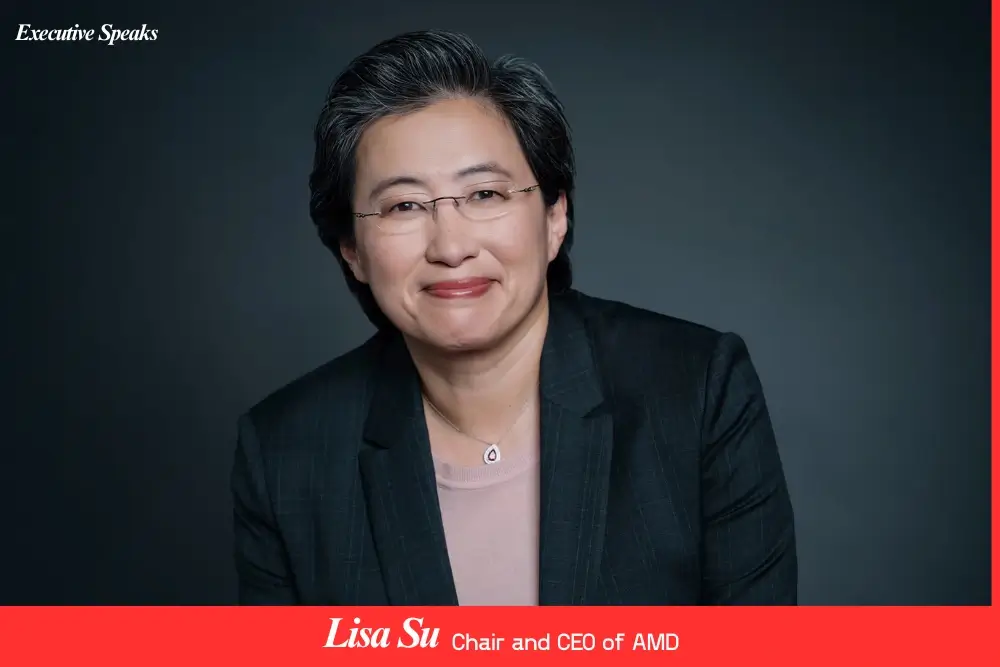
When the most influential technology leaders of the modern era are discussed, names like Elon Musk, Jensen Huang often dominate the conversation. Yet, one of the most remarkable business turnarounds in corporate history has been well crafted by Lisa Su.
As CEO of AMD, Lisa Su enhanced the semiconductor company which was in a deeply struggling face into one of the world's most respected technology organizations. AMD evolved from being just a competitor into a challenger for major industry giants with the leadership lessons from Lisa Su. In no time, it also became a key player in the dynamic artificial intelligence market.
Just like those valuable lessons from Satya Nadella and other skilled executives, Lisa Su’s success story also deeply informs entrepreneurs and aspiring leaders seeking to drive innovation. Furthermore, those who aim in navigating uncertainty, and building sustainable growth in their company can learn from her strategies.
The Challenge She Inherited at AMD
AMD was navigating through a chain of crucial challenges at the time Lisa Su was transferred the baton to be the CEO in 2014.
With the rivals having a firm ground in the market, AMD had to fight hard in the highly competitive semiconductor market. There was no consistent growth in revenue for the company and market analysts informed her that the long-term future of the company is at stake.
In such financially weak situations, leaders normally attempt finding new investors to raise more funding, however, Su had a totally different approach. Instead of focusing on quick wins, she concentrated on building a sustainable competitive advantage through innovation.
Leadership lessons from Lisa Su also reveal a clear philosophy: create better products, invest in talent, and commit to a long-term vision.
What strategic decisions did Lisa Su make?
Lisa Su exhibited critical leadership traits where she was always willing to make difficult decisions which had long-term benefits.
Her initial step after becoming the CEO was to urge AMD to refocus its resources on high-performance computing. Instead of focusing on all market areas where the company needed improvement, Lisa Su focussed on those areas that would help the company to differentiate itself from its competitors.
Based on this strategy, Su wanted investors to prioritize capital into processor architecture and product development, along with giving significance to research potential. The company had a turning point, with its launch of the new Ryzen processors, evidencing AMD’s capacity to maintain its competence in the high-performing computing industry.
The success continued with EPYC processors for data centers, enabling AMD to gain market share in enterprise computing and cloud infrastructure.
For leaders, the lesson is simple: growth often comes from strategic focus rather than expansion into every opportunity.
Building a Culture of Excellence
Strategy alone does not push a corporate company into success. Lisa Su, on the other hand, understood that sustainable success depends on people, which is why she gave emphasis on accountability and collaboration. She focussed on identifying the skills of employees and encouraged them to challenge assumptions and make contributions to a culture that was dedicated to continuous improvement. Like Corina Taban’s idea of influencing employees rather than expressing authority, Lisa Su also attempted to have a strong positive control over her workforce.
Her leadership style is often described as calm, transparent, and highly disciplined.
Rather than relying on charismatic speeches or aggressive management tactics, Su builds trust through consistency and credibility.
This approach has helped create a workplace culture where innovation thrives and teams remain aligned with long-term objectives.
Leadership Lessons from Lisa Su
1. Expertise Builds Credibility
Leaders do not need to know everything, but they must understand the industries they serve.
Lisa Su's technical expertise allowed her to make informed decisions, earn employee trust, and communicate effectively with customers and investors.
2. Focus Creates Competitive Advantage
Rather than pursuing every opportunity, successful leaders identify areas where their organizations can excel.
AMD's turnaround was driven by strategic focus, not diversification.
3. Long-Term Thinking Delivers Lasting Results
Many companies prioritize short-term gains at the expense of future growth.
Lisa Su demonstrated that patient investment in innovation can generate significant long-term value.
4. Culture Is a Strategic Asset
High-performing teams do not emerge by accident.
By fostering accountability, transparency, and collaboration, leaders can create environments where innovation flourishes.
5. Prepare Before Opportunities Arrive
The AI boom did not create AMD's success.
It amplified years of preparation, investment, and strategic execution.
Organizations that consistently invest in capability building are better positioned to capitalize on future trends.
Frequently Asked Questions
Who is Lisa Su?
Lisa Su is the Chair and CEO of AMD, known for leading one of the most successful turnarounds in the technology industry.
When did Lisa Su become CEO of AMD?
She became CEO of AMD in October 2014.
Why is Lisa Su famous?
She transformed AMD from a struggling chipmaker into a leader in high-performance computing and AI.
How did Lisa Su turn AMD around?
By focusing on innovation, investing in new processor technologies, and pursuing long-term growth strategies.
What leadership style is Lisa Su known for?
She is known for strategic thinking, technical expertise, transparency, and disciplined execution.